
If you are a student interested in the food industry, you may have wondered about Food Science vs Food Technology and whether they are actually two different fields. The confusion is understandable because the terms are closely related and are often used together.
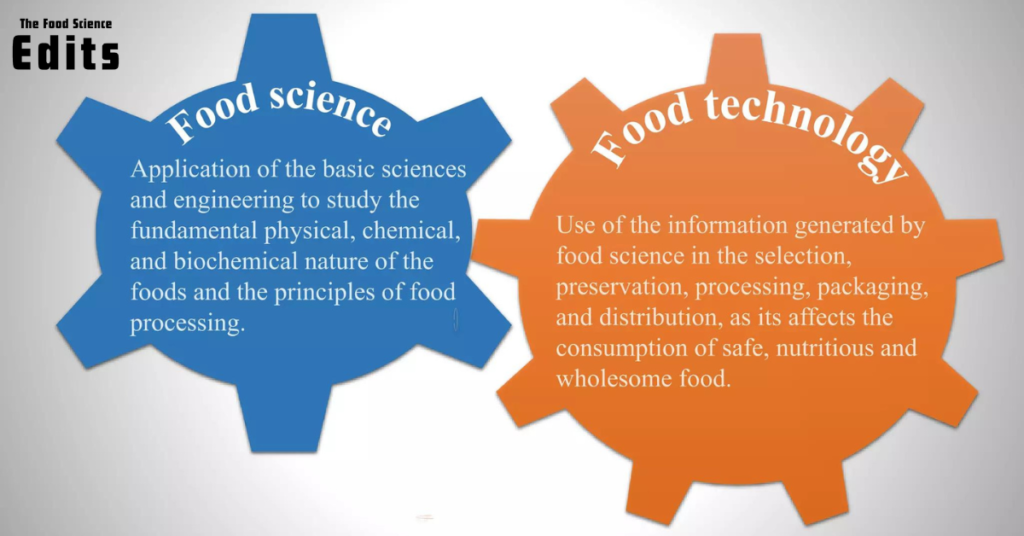
In simple terms, Food Science vs Food Technology is not necessarily a comparison between two separate degrees. Food science focuses on understanding the scientific properties of food, while food technology applies that knowledge to processing, preservation, production, packaging, and quality. Because these areas are closely connected, many universities combine them into one degree called Food Science & Technology.
So, if you are studying or planning to study Food Science & Technology, you are generally learning both the scientific foundation of food and how that knowledge is applied in the food industry.
In this guide, we will explore the difference between food science and food technology, what each area involves, how a food scientist and food technologist may differ, the career opportunities available to graduates, and how students can decide which area of the food industry interests them most.
What Is Food Science?
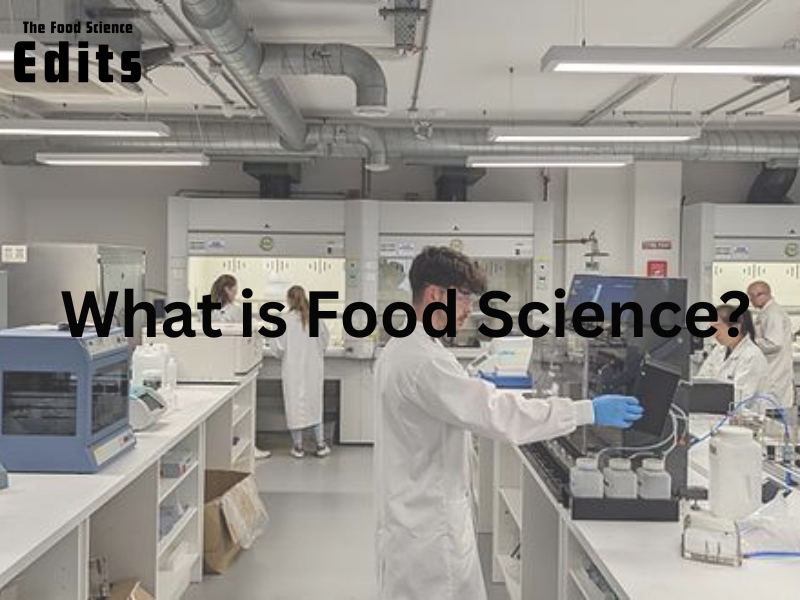
Food science is an interdisciplinary field that uses areas such as chemistry, biology, microbiology, physics, and engineering to understand food. It examines what food is made of, how its components behave, why food deteriorates, and how processing and storage affect its quality and safety.
Think of food science as asking questions such as:
- Why does milk spoil?
- Why does bread become stale?
- What causes a food’s color or texture to change?
- How do microorganisms affect food?
- How can the nutritional and sensory quality of a product be maintained?
- What happens to food during heating, freezing, drying, or fermentation?
What Does a Food Scientist Do? A food scientist may work on research, product development, food analysis, quality, safety, or sensory evaluation. For example, a food scientist developing a new yogurt might investigate how different ingredients affect its texture, acidity, flavor, nutritional value, and shelf life.
A food scientist vs food technologist comparison becomes clearer when you look at their typical focus: the scientist may investigate why a particular change occurs, while a technologist may focus more on how to consistently produce the desired product at commercial scale.
What Do Students Study in Food Science?
Students may study subjects such as:
- Food chemistry
- Food microbiology
- Food analysis
- Biochemistry
- Nutrition
- Sensory evaluation
- Food processing
- Food safety
- Food quality
- Product development
The exact subjects vary between universities. In a Food Science & Technology degree, these scientific subjects are usually taught alongside the technological and processing aspects of food.
What Is Food Technology?
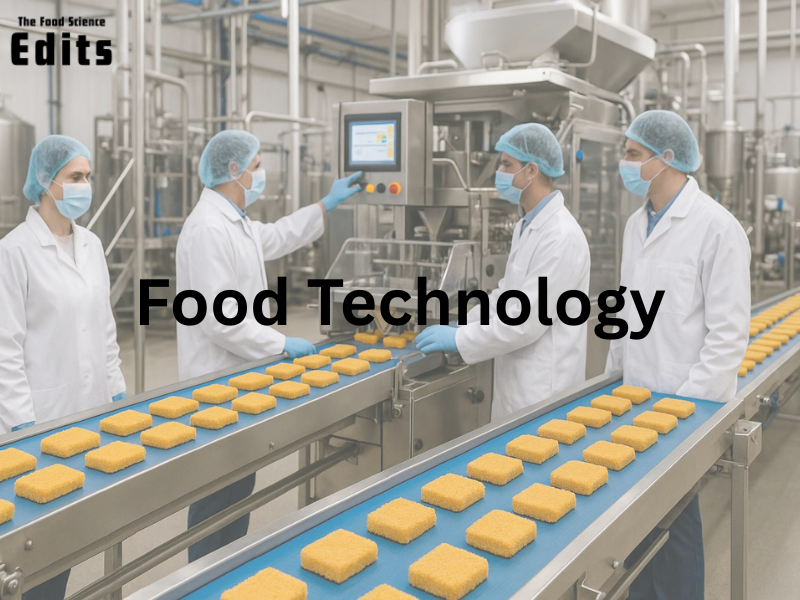
Food technology is the practical application of scientific knowledge to the processing, preservation, production, packaging, and quality management of food.
While food science helps us understand the properties and behavior of food, food technology focuses on using that knowledge to make food products safely, efficiently, consistently, and at the required quality.
For example, understanding how microorganisms grow in food is part of food science. Applying that knowledge to select appropriate processing and preservation conditions for a commercial food product involves food technology.
What Does a Food Technologist Do?
A food technologist may be involved in:
- Food processing
- Product development
- Production operations
- Quality control and assurance
- Food safety
- Preservation
- Packaging
- Process improvement
- Shelf-life evaluation
Consider a company producing a fruit beverage. A food technologist may work on the formulation, processing conditions, preservation method, packaging, quality checks, and production procedures needed to manufacture the product consistently.
What Do Students Study in Food Technology?
Depending on the university, students may study:
- Food processing and preservation
- Food engineering fundamentals
- Food packaging
- Food microbiology
- Food chemistry
- Quality assurance
- Food safety
- Product development
- Production management
In a combined Food Science & Technology degree, these subjects are generally studied alongside the scientific principles of food.
Food Science vs Food Technology: What’s the Difference?
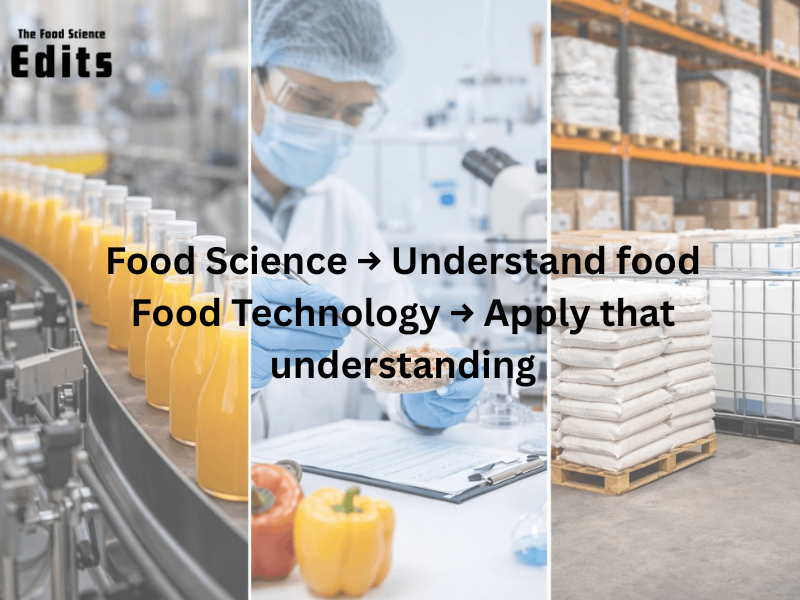
The simplest difference between food science and food technology is mainly a difference in emphasis, not a complete separation between two unrelated fields.
Food science focuses on understanding food scientifically, while food technology focuses on applying that knowledge to food processing, production, preservation, packaging, and quality.
However, the two areas overlap considerably. A food scientist may work on product development or processing, while a food technologist may conduct research, analyze food, or work on product formulation.
Food Science vs Food Technology at a Glance
| Aspect | Food Science | Food Technology |
| Main emphasis | Understanding food scientifically | Applying food science in practice |
| Focus | Properties, composition, reactions, and behavior | Processing, production, preservation, and application |
| Common subjects | Chemistry, microbiology, analysis, sensory science | Processing, packaging, production, preservation |
| Typical activities | Research, analysis, investigation, product development | Processing, production, quality, process improvement |
| Main question | Why does food behave this way? | How can we use this knowledge effectively? |
Are Food Science and Food Technology Separate Degrees?
Not necessarily.
Many universities offer Food Science & Technology as one combined degree. In such programs, students learn both the scientific principles of food and their technological applications.
The name and structure of the degree can vary by university and country. Some institutions may offer separate food science or food technology programs, while others combine them into a single program.
Therefore, students should not assume that choosing Food Science & Technology means choosing between two separate degrees. In many cases, the degree is designed to provide knowledge and skills from both areas.
Food Science vs Food Technology: Key Differences in Detail
Looking beyond definitions makes Food Science vs Food Technology easier to understand.
Difference in Focus
Food science is concerned with the nature and behavior of food. It helps explain the scientific reasons behind changes in food.
Food technology takes those principles and uses them to solve practical problems in food production.
For instance, understanding the chemical reactions responsible for browning is food science. Selecting and controlling a processing method to achieve the desired color and quality in a commercial product involves food technology.
Difference in Coursework
There is considerable overlap in coursework. Both students may study food chemistry, microbiology, processing, food safety, and quality.
The difference is often in emphasis. A food science program may provide greater exposure to fundamental science, analysis, research, and the properties of food. A food technology program may place greater emphasis on processing, production, equipment, packaging, and industrial applications.
Difference in Skills
Food science students commonly develop skills in:
- Laboratory analysis
- Scientific research
- Experimental design
- Data interpretation
- Food chemistry and microbiology
- Sensory evaluation
Food technology students may develop a stronger emphasis on:
- Processing operations
- Production management
- Quality control
- Process optimization
- Packaging
- Industrial problem-solving
These skills are not exclusive to one field. Graduates can develop many of the same abilities through coursework, internships, and industry experience.
Food Scientist vs Food Technologist
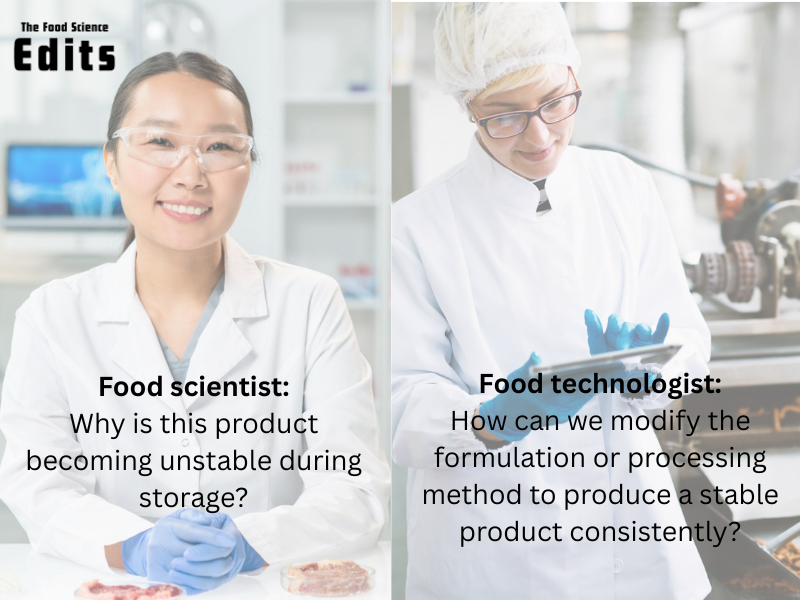
The food scientist vs food technologist distinction is useful for understanding career roles, but the two professions can overlap in the workplace.
A food scientist generally focuses more on investigating the scientific properties and behavior of food. Their work may involve food analysis, research, product development, food chemistry, microbiology, sensory evaluation, or food safety. A food technologist generally focuses more on applying scientific knowledge to food processing, production, preservation, quality, and commercial product development.
These are simplified examples, and actual responsibilities depend on the employer and job title. In many food companies, professionals from both backgrounds work together on the same product or production problem. This overlap is one reason why a Food Science & Technology degree can provide students with a broad foundation for careers across the food industry.
Food Science vs Food Technology: Career Opportunities
One of the biggest advantages of studying Food Science & Technology is that students are not limited to one type of job. The combination of scientific and technological knowledge can prepare graduates for different areas of the food industry.
Food Science Career Options
A food science career may involve:
- Food scientist
- Food analyst
- Research assistant or scientist
- Product development specialist
- Sensory analyst
- Food safety professional
- Quality assurance professional
- Quality control analyst
These roles may involve laboratory analysis, research, product development, food safety, quality evaluation, or scientific investigation.
Food Technology Career Options
A food technology career may include:
- Food technologist
- Production specialist
- Quality assurance professional
- Quality control officer
- Food processing specialist
- Product development professional
- Packaging specialist
- Food safety professional
These roles may involve food manufacturing, processing, production, quality management, product improvement, and industrial applications.
Where Can Food Science & Technology Graduates Work?
Graduates can explore opportunities in areas such as:
- Dairy
- Bakery and confectionery
- Beverages
- Meat and poultry
- Fruits and vegetables
- Snacks and convenience foods
- Food packaging
- Research and development
- Quality assurance and quality control
- Food safety and regulatory organizations
- Academia and research
Your specific career path will depend on your interests, specialization, practical experience, and the skills you develop during and after your degree.
Food Science vs Food Technology: Which Career Path Is Better?
There is no single answer to which is better in Food Science vs Food Technology. Since the two areas are closely connected, your choice should depend more on the type of work you enjoy than on the name of the field.
If you enjoy laboratory work, research, food chemistry, microbiology, analysis, and understanding why changes occur in food, you may be more interested in food science-related roles.
If you enjoy food processing, manufacturing, production, quality control, process improvement, and practical applications, you may prefer food technology-related roles.
However, these are not strict boundaries. A graduate with a Food Science & Technology degree can develop skills in both areas and move between different functions in the food industry.
For example, a graduate might begin in quality control, move into product development, and later specialize in food safety or production. Your internships, technical training, certifications, and work experience can also influence your career direction.
Food Science vs Food Technology: Which One Should You Study?

If your university offers BS Food Science & Technology, you usually do not have to choose between food science and food technology as separate degrees. The program is designed to introduce you to both areas.
Instead, think about which part of the field interests you most.
If You Enjoy Science and Laboratory Work
You may enjoy areas such as:
- Food chemistry
- Food microbiology
- Food analysis
- Research
- Sensory science
- Product development
If You Enjoy Processing and Manufacturing
You may be more interested in:
- Food processing
- Production
- Quality control
- Quality assurance
- Food preservation
- Packaging
- Process optimization
If You Are Interested in Product Development
Both food science and food technology are relevant.
Developing a new food product requires scientific understanding of ingredients and food properties, as well as practical knowledge of formulation, processing, quality, packaging, and production.
What Should You Look for When Choosing a University?
Don’t choose a program based only on its name. Check:
- Course curriculum
- Laboratory facilities
- Food processing equipment
- Research opportunities
- Internship opportunities
- Industry connections
- Specialization options
- Faculty expertise
A well-rounded Food Science & Technology program can give you a foundation in both the science and technology of food, allowing you to discover which area you want to pursue as your career develops.
Frequently Asked Questions
What is the difference between food science and food technology?
Food science focuses on understanding the scientific properties and behavior of food, while food technology applies that knowledge to processing, preservation, production, packaging, and quality.
Is Food Science & Technology one degree?
It can be. Many universities offer Food Science & Technology as a combined degree, allowing students to study both the scientific and technological aspects of food. However, degree structures vary between universities.
Is food science the same as food technology?
They are not the same, but they are closely connected. Food science provides scientific understanding of food, while food technology focuses on applying that knowledge in practical food production and processing.
What is the difference between a food scientist and a food technologist?
A food scientist generally focuses more on scientific investigation, food properties, analysis, and research. A food technologist generally focuses more on processing, production, quality, preservation, and practical food applications. Their responsibilities can overlap.
Is food science a good career?
Food science can lead to opportunities in research, product development, food analysis, quality, safety, and other areas of the food industry. Career opportunities depend on your education, skills, experience, and specialization.
Is food technology a good career?
Food technology can lead to roles in food processing, manufacturing, quality assurance, product development, food safety, packaging, and related areas.
Can a Food Science & Technology graduate work as a food technologist?
Yes. A Food Science & Technology degree provides knowledge from both areas. Graduates can pursue food technology-related roles when they have the relevant technical skills, practical experience, and qualifications required by the employer.
Which is better, food science or food technology?
Neither is universally better. Both are important areas of the food industry. Your choice should depend on whether you are more interested in research and scientific analysis, processing and production, or a combination of both.
What jobs can I get after a Food Science & Technology degree?
Depending on your skills and specialization, you may work in food production, quality assurance, quality control, food safety, research and development, product development, food analysis, processing, packaging, or related areas.
Final Thoughts:
The easiest way to understand Food Science vs Food Technology is to think about their roles within the same broader field.
Food science helps us understand food, while food technology applies that understanding to processing, preservation, production, packaging, and quality.They are closely connected rather than completely separate disciplines. This is why many universities offer Food Science & Technology as one combined degree, giving students exposure to both scientific principles and their practical applications. For students, this can be an advantage. You can build a broad foundation and later discover whether you are more interested in laboratory research, product development, food safety, quality, processing, production, or another area of the food industry.
So, instead of asking whether food science or food technology is better, consider a more useful question: Which area of the food industry matches your interests, strengths, and career goals? Understanding the difference between the two can help you make that decision with greater confidence. Students choosing a career in food science should follow The Food Science Edits to read blogs like this.

Atika Ishtiaq is a Food Science & Technology graduate, researcher, and content writer, and the founder of The Food Science Edits. She combines her background in food science with research-based writing to create clear, engaging, and informative content on food science, food technology, nutrition, food safety, and related topics.
The article is informative and easy to understand. It clearly explains the difference between Food Science and Food Technology, their career opportunities, and how students can choose the right field according to their interests. I especially liked the simple explanation that Food Science focuses on “Why”, while Food Technology focuses on “How.”
Question:
What are the most important skills a student should develop to build a successful career in Food Science or Food Technology?
Key skills include food chemistry, microbiology, food processing, food safety, laboratory work, problem-solving, quality control, and attention to detail. Communication, teamwork, adaptability, and continuous learning are also essential. Food Science emphasizes research and product development, while Food Technology focuses more on processing, production, quality assurance, and HACCP.