
There is a community of complex microorganisms in the human gut that includes bacteria and other microbes that interact with the digestive system and affect several aspects of health. The balance and activities of these microorganisms are affected by diet, lifestyle, medications, and other factors. Three terms frequently discussed in this context are probiotics, prebiotics, and postbiotics and their difference(Probiotics vs. Prebiotics vs. Postbiotics) is discussing in this blog in detail.
They describe different things, despite having similar-sounding names. Live microorganisms that offer a health advantage when consumed or given in sufficient quantities are known as probiotics. Substances that are selectively utilized by microorganisms in ways that benefit the host are known as prebiotics. A prebiotic is a dead microorganism or its constituent parts that provide health advantages. These classifications are based on the consensus scientific definitions created by the International Scientific Association for Probiotics and Prebiotics (ISAPP).
Readers may make sense of food labels, dietary recommendations, and research on gut health by knowing Probiotics vs. Prebiotics vs. Postbiotics. Instead of presuming one category is superior to another, it’s helpful to learn about its functioning, location, and the scientific data supporting it.
What Exactly Are Postbiotics, Prebiotics, and Probiotics?
What Are Probiotics?
Probiotics are live bacteria that, when taken in the right amounts, have health advantages. Depending on the product and the evidence supporting their use, they may incorporate specific bacterial strains or other microorganisms. Lactobacillus and Bifidobacterium are frequently studied groups. A microbe is not a certified probiotic just because it is a member of a well-known family.
Foods and nutritional supplements may include probiotics. In measured amounts, probiotic supplements offer selected microorganisms, while live cultures are present in several yogurts and kefir products.
The effects depend on the strain, dose, quality of the product, and desired health result. As a result, it shouldn’t be anticipated that different probiotic products would offer the same benefits.
What Exactly Are Prebiotics?
Substrates that microorganisms preferentially utilize in ways that provide the host with a health advantage are known as prebiotics. Dietary fibers or associated carbohydrates that enter the intestine and may be utilized by specific gut microbes are among the many well-known prebiotics. Certain oligosaccharides and inulin are a couple of examples.
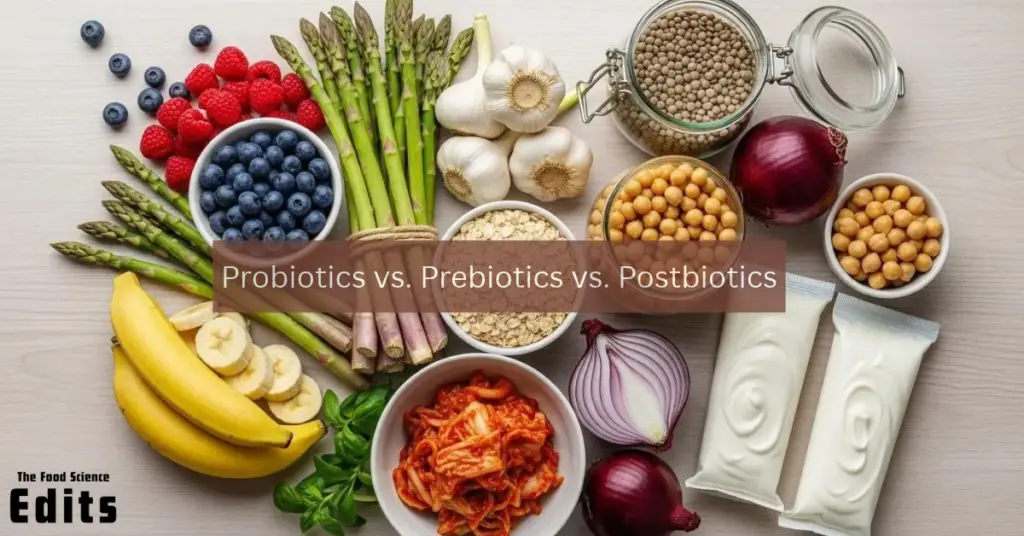
Onions, garlic, leeks, asparagus, oats, legumes, and bananas are some food sources. Different foods contain varying amounts and kinds of prebiotic chemicals.
Prebiotics, unlike probiotics, don’t bring in live bacteria. Rather, they offer substrates that can be utilized by certain bacteria. One of the primary distinctions between prebiotics and probiotics is this.
What Exactly Are Postbiotics?
Preparations of inactive microorganisms and/or their components that benefit the host’s health are known as postbiotics. This definition comes from a 2021 Nature Reviews Gastroenterology & Hepatology expert consensus statement.
Where relevant, postbiotic compositions may include inactivated microbial cells, cell components, and metabolites that have an impact. Postbiotics are not required to survive to meet the definition since the bacteria are inanimate.
According to the consensus definition of the ISAPP, a single purified microbial metabolite is not regarded as a postbiotic, which is a significant difference. A short-chain fatty acid produced during microbial fermentation, for example, is a microbial metabolite, but it is not automatically a postbiotic. When examining scientific papers and commercial product claims, this distinction is crucial.
Probiotics vs. Prebiotics vs. Postbiotics: Important Distinctions
What each offers and how it relates to microorganisms is the primary distinction between Probiotics vs. Prebiotics vs. Postbiotics. Prebiotics provide selectively utilized substrates, postbiotics contain preparations of inanimate bacteria or their constituents that offer a health advantage, and probiotics introduce advantageous live bacteria.
| Feature | Probiotics | Prebiotics | Postbiotics |
| What they are | Live microorganisms | Substrates selectively used by host microorganisms | Preparations of inanimate microorganisms and/or their components |
| Main role | Provide a health benefit through specific live microorganisms | Support beneficial microbial activity | Provide a health benefit without requiring living microorganisms |
| Examples | Specific strains of Lactobacillus and Bifidobacterium | Inulin and certain oligosaccharides | Characterized preparations of inactivated microbial cells or components |
| Possible sources | Certain yogurts, kefir, and supplements | Onions, garlic, oats, legumes, and other suitable plant foods | Specific products made using inactivated microorganisms |
| Important consideration | Strain, dose, viability, and evidence matter | Not every dietary fiber qualifies as a prebiotic | Not every microbial metabolite or fermented food qualifies as a postbiotic |
Scientific basis: ISAPP consensus statements on probiotics, prebiotics, and postbiotics.
Probiotics, Prebiotics, and Postbiotics Benefits for Gut Health
The potential benefits of these three categories(Probiotics vs. Prebiotics vs. Postbiotics) are an active area of nutrition and microbiome research. However, their effects should be evaluated individually rather than assuming that every product offers the same advantages.
How Probiotics May Support Gut Function
Certain probiotics have been studied for specific digestive conditions and outcomes. Depending on the strain and clinical situation, research has investigated effects on particular types of diarrhea and other gastrointestinal symptoms. However, findings from one strain cannot automatically be applied to another. A product’s label, dose, storage conditions, and evidence for its intended use all matter. Probiotics should not be presented as a universal treatment for digestive disorders.
How Prebiotics Support Beneficial Gut Microbes
Prebiotics can be utilized by selected microorganisms in the gut. Some fermentable prebiotic carbohydrates are converted into substances such as short-chain fatty acids during microbial fermentation. These substances are involved in intestinal processes, including interactions between microorganisms and the gut environment. Research has also investigated prebiotic intake in relation to bowel function and other health outcomes. The results depend on the specific prebiotic, amount consumed, and individual response.
Potential Benefits of Postbiotics
Postbiotics are being investigated for their potential effects on gut function, immune responses, and other aspects of health. Because they contain inactivated microorganisms or their components, their properties differ from those of live probiotic preparations. Nevertheless, the word postbiotic alone does not establish effectiveness. Benefits must be demonstrated for the specific preparation and intended use. Evidence for one product cannot be assumed to apply to all postbiotic supplements.
What Does the Scientific Evidence Say?
Scientific consensus definitions provide a reliable starting point, but definitions are not proof that every product works. Research findings must be interpreted according to study quality, population, intervention, dose, and measured outcome. For readers interested in probiotics and prebiotics for gut health, a varied, fiber-rich diet is a practical starting point. Supplements may have a role in specific circumstances, but they should be selected according to reliable evidence rather than marketing claims.
Food Sources: Probiotics vs. Prebiotics vs. Postbiotics
Food is a practical way to explore these concepts. Still, the presence of a microorganism or fermentable ingredient does not automatically qualify a food as a probiotic, prebiotic, or postbiotic.
Foods That Contain Probiotics
Examples of fermented foods that may contain live microorganisms include:
- Yogurt: Some products contain live cultures with identified strains.
- Kefir: A fermented milk drink made using microbial cultures.
- Kimchi and sauerkraut: Fermented vegetables that may contain live microorganisms when unpasteurized and properly handled.
- Tempeh: A fermented soybean food, although processing and cooking affect which microorganisms remain alive.
Not all fermented foods qualify as probiotic foods. Heat treatment, pasteurization, baking, and storage can affect microbial viability. To make a probiotic claim, the relevant microorganisms must meet the accepted definition and have evidence supporting a health benefit.
Foods Rich in Prebiotics
Many plant foods contain fibers and carbohydrates that can support microbial activity. Examples include:
- Onions, garlic, and leeks
- Asparagus and chicory root
- Oats and whole grains
- Beans and other legumes
- Bananas
Different foods contain different types and amounts of fermentable substances. Not every fiber meets the scientific definition of a prebiotic, which requires selective microbial use and a demonstrated health benefit.
Where Can You Find Postbiotics?
Postbiotics are associated with specifically prepared microbial materials rather than a simple list of everyday foods. Certain fermented foods contain inanimate microbial cells or their components, but this alone does not establish that they qualify as postbiotics. Under the ISAPP definition, a preparation must contain inanimate microorganisms and/or their components and demonstrate a health benefit. Purified microbial metabolites alone do not meet this definition.
Whole Foods vs. Supplements
Whole foods provide nutrients alongside their microbial or fermentable components. Supplements, in contrast, may deliver specific strains, substrates, or characterized postbiotic preparations in measured amounts. Neither format is automatically better for every person. Check the ingredients, intended use, product quality, and evidence supporting any health claims. A product marketed for gut health should not replace a varied diet or necessary medical care.
Can You Combine Probiotics, Prebiotics, and Postbiotics?
These categories can be discussed together because they relate to microorganisms and their interactions with the host. However, combining them does not automatically guarantee better results.
Understanding Synbiotics
A synbiotic is a mixture of live microorganisms and substrates selectively used by host microorganisms that confers a health benefit. According to the ISAPP consensus statement, synbiotics can be complementary, with components serving their respective functions, or synergistic, with components designed to work together. For example, a product may combine a probiotic strain with a suitable prebiotic substrate. Whether the combination is beneficial depends on the formulation and supporting evidence.
How the Three Categories May Work Together
Probiotics provide selected live microorganisms, prebiotics provide substrates used by microorganisms, and postbiotics provide preparations of inanimate microbial cells or their components. These approaches may have different applications, but they are not interchangeable. A product containing all three categories should be evaluated based on its specific ingredients, safety, and demonstrated effects rather than the number of ingredients listed on its label.
Safety, Limitations, and Common Misconceptions
Although probiotics, prebiotics, and postbiotics are relevant to nutrition research, they are not necessary or suitable in the same way for everyone.
Probiotics vs. Prebiotics vs. Postbiotics are these all Safe for Everyone?
Safety depends on the product, dose, intended use, and person’s health. Probiotics may cause mild digestive symptoms in some people, while increasing prebiotic fiber too quickly can cause gas and bloating. People who are severely ill or immunocompromised should consult a healthcare professional before using probiotic products.
Can Probiotics Cause Side Effects?
Some people experience temporary digestive discomfort after taking probiotics. Responses vary by strain and individual. Persistent or severe symptoms should not be dismissed as a normal reaction, and supplements should not replace appropriate medical evaluation.
Do All Fermented Foods Contain Probiotics?
No. Fermentation involves microbial growth and the transformation of food components, but not every fermented food contains live microorganisms at the time of consumption. Even when live cultures are present, the food must meet the probiotic definition to justify a probiotic claim.
When Should You Seek Professional Advice?
Consult a qualified healthcare professional if you have persistent digestive symptoms, a diagnosed gastrointestinal condition, or concerns about supplements and medication interactions. People with weakened immune systems or serious underlying illnesses should receive individualized advice before taking probiotics.
Frequently Asked Questions
1. What Is the Main Difference Between Probiotics and Prebiotics?
Probiotics are live microorganisms that provide a health benefit when administered in adequate amounts. Prebiotics are substrates selectively used by host microorganisms in ways that provide a health benefit.
2. Are Postbiotics Better Than Probiotics?
Not necessarily. Postbiotics contain preparations of inanimate microorganisms and/or their components, while probiotics contain live microorganisms. Their benefits depend on the specific preparation, intended use, and scientific evidence.
3. Which Foods Provide Probiotics and Prebiotics?
Certain yogurts and kefir products provide live cultures, while foods such as oats, onions, garlic, and legumes contain fibers or carbohydrates that may support prebiotic activity. Food composition and processing affect their properties.
4. Can You Take Probiotics and Prebiotics Together?
Yes, they can be combined in foods or supplements. A product designed to provide a health benefit through a combination of live microorganisms and selectively utilized substrates may qualify as a synbiotic. Its benefits depend on the formulation and evidence.
5. Do Postbiotics Occur Naturally in Foods?
Some foods contain inanimate microbial cells or their components, but these features alone do not establish that a food qualifies as a postbiotic. The accepted definition requires a preparation that confers a health benefit.
6. Do Healthy People Need Probiotic Supplements?
Not everyone needs probiotic supplements. Whether a supplement is useful depends on individual circumstances and the evidence for its intended purpose. A varied diet containing fruits, vegetables, legumes, whole grains, and suitable fermented foods can be a practical foundation for dietary support of the gut microbiome.
Conclusion
Understanding Probiotics vs. Prebiotics vs. Postbiotics begins with recognizing their different roles. Probiotics are beneficial live microorganisms, prebiotics are substrates selectively used by microorganisms, and postbiotics are preparations of inanimate microorganisms or their components that provide a health benefit.
All three are relevant to food science, nutrition, and gut microbiome research, but their benefits should not be exaggerated or generalized across products. Food choices, processing methods, individual tolerance, and scientific evidence all matter.
For students and health-conscious readers, the most useful approach is to understand these definitions, choose varied and nutritious foods, evaluate health claims carefully, and seek professional guidance when considering supplements for a specific health concern and know a clear a difference between Probiotics vs. Prebiotics vs. Postbiotics.
Explore More
It is a vast and fascinating field, with so much more to discover. Explore more articles on The Food Science Edits to learn about food safety, processing, preservation, packaging, product development, and the science behind the food we eat.
Have a question or something to add? Share your thoughts and insights in the comments. We’d love to hear your perspective.
Want to explore more? Discover our latest articles and stay updated with The Food Science Edits.
Join the conversation on Instagram, LinkedIn, or Facebook for more food science insights. Those social links are already available in your site’s footer.

Atika Ishtiaq is a Food Science & Technology graduate, researcher, and content writer, and the founder of The Food Science Edits. She combines her background in food science with research-based writing to create clear, engaging, and informative content on food science, food technology, nutrition, food safety, and related topics.