
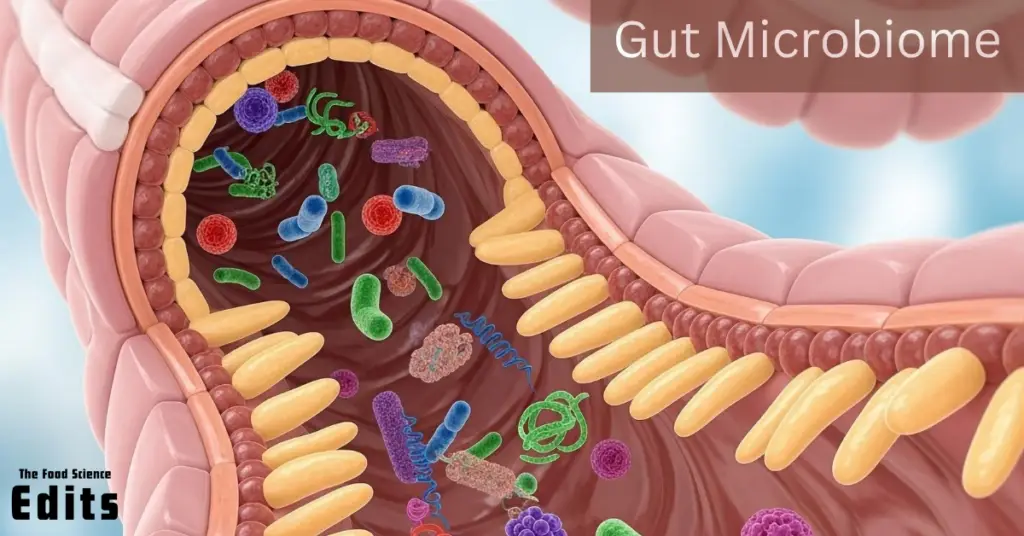
Have you ever wondered what lives inside your digestive system and how those microorganisms may affect your health? The answer is the gut microbiome, a complex community of microorganisms living throughout the gastrointestinal tract.
So, what is the gut microbiome? In simple terms, it is the community of microorganisms, their genetic material, and the environment they live in within the digestive system. Although bacteria are an important part of it, the microbiome also includes other microorganisms such as fungi, archaea, and viruses.
Understanding the gut microbiome is especially useful for students and educators studying food science, nutrition, microbiology, physiology, or health sciences. Rather than thinking of it as a collection of “good” and “bad” bacteria, it is more accurate to view it as a dynamic ecosystem in which microorganisms interact with each other and with the human body.
What Is the Gut Microbiome?
The gut microbiome is the microbial ecosystem associated with the gastrointestinal tract. It contains microorganisms that differ in number and composition from one part of the digestive system to another.
The term microbiota generally refers to the microorganisms themselves, while microbiome is commonly used to describe the microorganisms and their collective genetic material. In everyday discussions, the terms are sometimes used interchangeably. Bacteria receive most of the attention in microbiome research, but they are not the only organisms present. Fungi, archaea, and viruses also form part of the microbial environment.
1. Where is the human gut microbiome found?
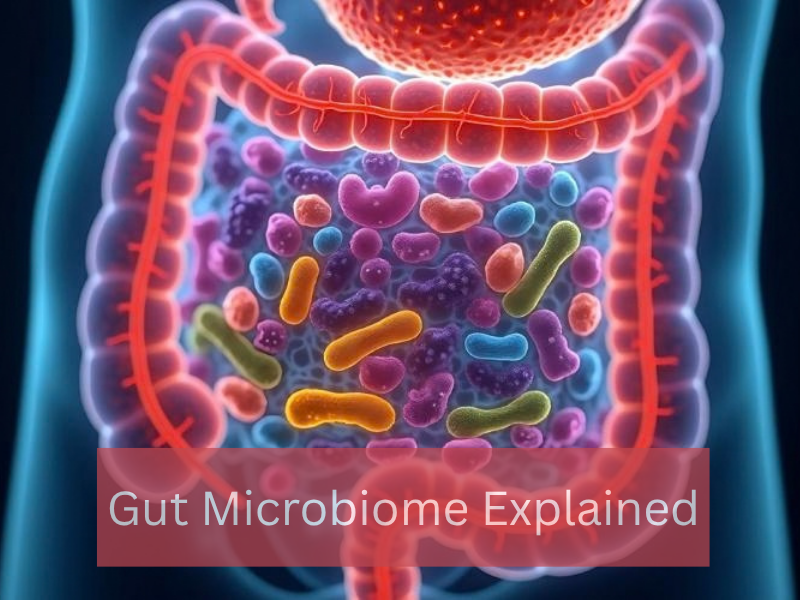
Microorganisms are present throughout the gastrointestinal tract, but the conditions differ considerably between locations. Factors such as acidity, oxygen availability, digestive secretions, food movement, and nutrient availability influence which microorganisms can live in each region.
The large intestine contains particularly dense microbial communities. This is partly because undigested dietary components, including certain fibers and carbohydrates, reach the colon and can be used by resident microorganisms. A simple gut microbiome explained approach, therefore, is to think of the digestive tract as an environment where many different microorganisms live, compete, cooperate, and respond to changes in their surroundings.
Why Is the Gut Microbiome Important?
The microbiome contributes to several biological processes, making it relevant to digestion, intestinal function, immunity, and other aspects of human physiology.
1. Digestion and microbial fermentation
Human digestive enzymes cannot break down every component of food. Some dietary carbohydrates and fibers reach the colon, where microorganisms can ferment them. This process produces metabolites, including short-chain fatty acids such as acetate, propionate, and butyrate. These compounds can interact with intestinal cells and contribute to the chemical environment of the gut. This is one reason diet and microbial activity are closely connected.
2. Interaction with the immune system
The digestive tract contains a large amount of immune tissue and is constantly exposed to food components and microorganisms. Gut microorganisms interact with intestinal tissues and participate in processes involved in immune regulation. However, this relationship is complex. The presence of a particular bacterium does not automatically determine whether someone has good or poor health. Microbial activity, host biology, diet, environment, and other factors all contribute.
3. The gut-brain connection
Researchers also study communication between the gastrointestinal tract and the nervous system, known as the gut-brain axis. This communication can involve neural signals, hormones, immune pathways, and microbial metabolites. Although research in this area is developing rapidly, it is important to distinguish established mechanisms from claims that a particular food or supplement can directly control mood or mental health.
4. Other microbial functions
Depending on the microorganism and its environment, gut microbes can also contribute to:
- Metabolism of dietary compounds
- Production or modification of microbial metabolites
- Interactions with the intestinal barrier
- Competition with potentially harmful microorganisms
- Transformation of certain compounds entering the digestive tract
These functions help explain why the microbiome is an important part of gut health.
What Makes a Healthy Gut Microbiome?
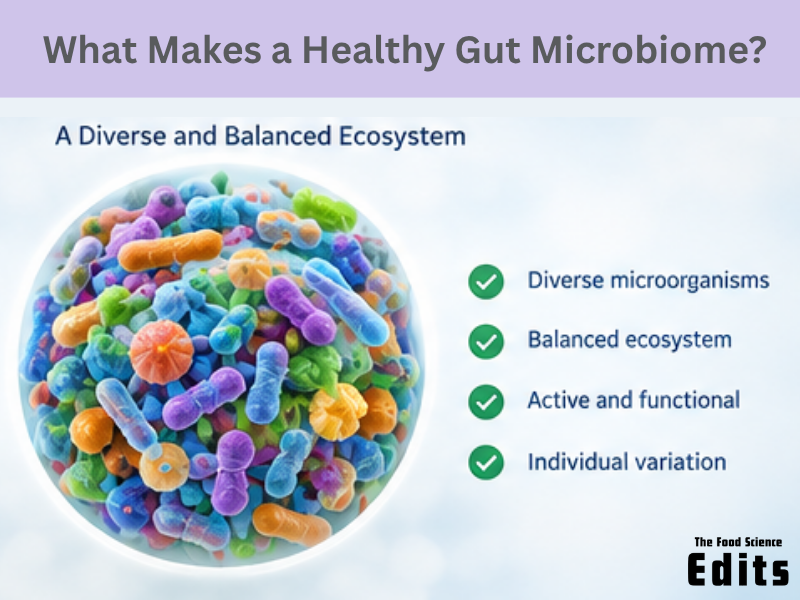
There is no single microbial profile that represents the “perfect” microbiome for every person. Researchers instead consider factors such as microbial diversity, composition, activity, stability, and interaction with the host.
1. Microbial diversity and function
A diverse microbial community may contain organisms with different metabolic capabilities. However, diversity alone does not define health. Scientists also need to consider which microorganisms are present, how abundant they are, what they are doing, and how they interact with other organisms and the host.
2. Why “good” and “bad” bacteria can be misleading
It is common to see microorganisms divided into “good” and “bad” bacteria. This language can make a complex subject easier to understand, but it does not fully reflect microbiome science. A microorganism’s effect may depend on its abundance, location, surrounding microbial community, and the condition of the host. Some organisms may be harmless in one context but associated with problems under different conditions. The goal, therefore, is not simply to remove every microorganism considered “bad.” A functioning microbiome is an ecosystem with many interacting members.
3. Individual differences matter
Two healthy people can have noticeably different microbial communities. Age, genetics, diet, medications, environment, lifestyle, and health status can all contribute to these differences. This individual variation is one reason researchers do not define gut health using a single universal list of bacterial species.
What Can Affect Your Gut Microbiome?
The microbial community can change throughout life. Some influences are temporary, while others may have longer-lasting effects.
1. Diet
Diet is one of the major environmental influences on gut microbial communities. Different microorganisms use different nutrients, so changes in dietary patterns can alter the substrates available for microbial metabolism. Dietary fiber is particularly relevant because certain fibers reach the colon and can be fermented by microorganisms.
2. Lifestyle, physical activity, and sleep
Physical activity has been studied in relation to microbial diversity and metabolic activity. However, lifestyle factors often overlap. People who exercise regularly may also have different diets, sleep patterns, body composition, and daily routines. Sleep and stress can also interact with gastrointestinal function through communication between the nervous system and digestive tract.
3. Medications and antibiotics
Medications can affect microbial communities in different ways. Antibiotics are especially important because they target bacteria and can change the composition of the gut microbiota. This does not mean medically necessary antibiotics should be avoided. Antibiotics can be essential for treating bacterial infections. They should simply be used appropriately under professional medical guidance.
4. Age and environment
The human gut microbiome changes throughout life. Age, early-life exposures, geography, environment, illness, and medication use can all contribute to differences between individuals. There is therefore no single factor that determines a person’s microbiome.
What Is Gut Dysbiosis?
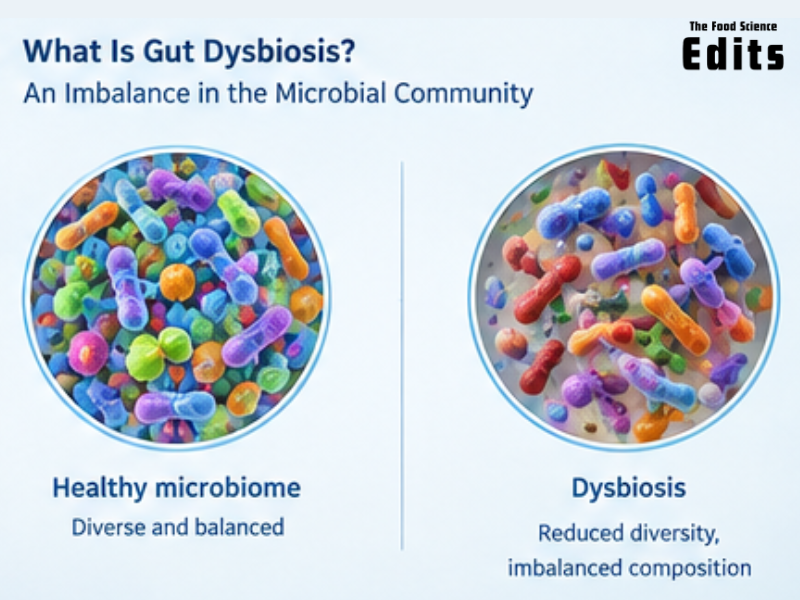
Dysbiosis generally refers to a change or disruption in a microbial community. It is a broad scientific term rather than a simple diagnosis meaning that someone has “too many bad bacteria.”
1. What can contribute to dysbiosis?
Changes in microbial communities may be associated with factors such as:
- Major dietary changes
- Certain medications
- Antibiotic exposure
- Illness
- Environmental influences
- Changes in the intestinal environment
Researchers investigate dysbiosis in relation to various health conditions. However, finding an association between a particular microbial pattern and a disease does not automatically prove that the microbial change caused the disease.
2. Do digestive symptoms prove dysbiosis?
No. Symptoms such as bloating, constipation, diarrhea, or abdominal discomfort can have many possible causes. Likewise, finding differences in someone’s microbiome compared with another person does not automatically mean that the person has a disease. Microbiome results need to be interpreted within the wider clinical and biological context.
How Can You Support Your Gut Microbiome?
There is no single food or habit that can guarantee a particular microbiome. A better approach is to maintain dietary and lifestyle patterns that support overall health.
1. Eat a varied, fiber-rich diet.
A diverse diet provides different nutrients and types of carbohydrates that can be used by different microorganisms.
Useful choices include:
- Vegetables and fruits
- Beans, lentils, and other legumes
- Whole grains
- Nuts and seeds
- Other minimally processed plant foods
If you increase fiber substantially, doing so gradually and maintaining adequate fluid intake may make the transition more comfortable.
2. Include fermented foods when appropriate.
Some fermented foods contain live microorganisms, depending on how they are produced and stored. Examples include certain yogurts, kefir, kimchi, and other fermented foods. However, fermented foods are not automatically probiotics. The term probiotic has a specific scientific definition based on a live microorganism providing a demonstrated health benefit.
3. Maintain healthy daily habits.
Gut health is influenced by more than food. Regular physical activity, adequate sleep, stress management, and a balanced dietary pattern are all components of healthy living. These habits should be viewed as part of an overall approach rather than as methods for achieving a specific microbiome composition.
Probiotics, Prebiotics, and the Gut Microbiome
Probiotics and prebiotics are related to the microbiome but have different meanings.
1. What are probiotics?
Probiotics are live microorganisms that provide a health benefit when consumed in adequate amounts. Their effects are generally strain-specific, meaning evidence for one microorganism cannot automatically be applied to every probiotic product.
2. What are prebiotics?
Prebiotics are substances that are selectively used by microorganisms and provide a health benefit. Many are types of dietary carbohydrates that can be metabolized by particular microorganisms. This makes prebiotics different from probiotics: probiotics provide specific live microorganisms, while prebiotics provide substrates that selected microorganisms can use.
3. Do everyone need probiotic supplements?
No. Whether a probiotic is useful depends on the strain, dose, health condition, and individual circumstances. Supplements should not be considered a universal solution for improving the gut microbiome.
Can You Test Your Gut Microbiome?
Microbiome testing can provide information about microorganisms detected in a sample, but interpreting the results requires care.
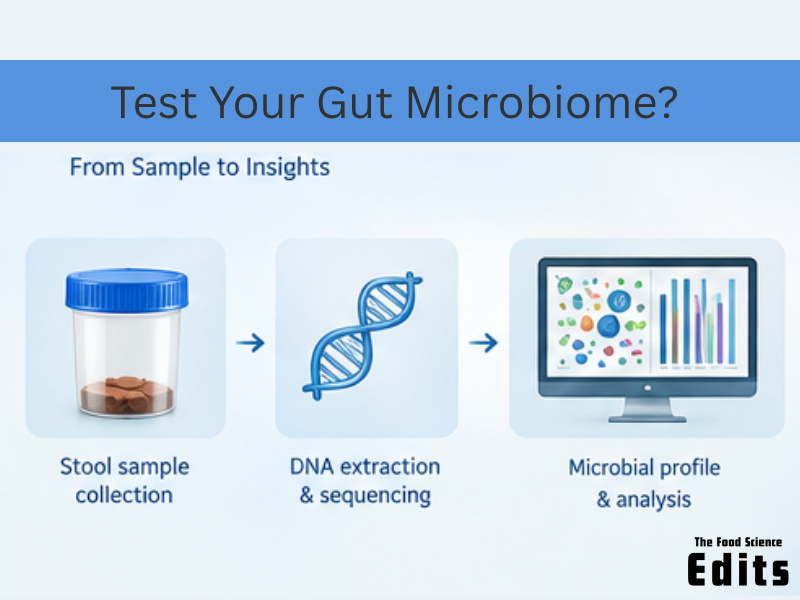
1. How is the microbiome studied?
Researchers can analyze stool samples using methods such as DNA sequencing and other molecular techniques. These methods can help identify microbial composition and, depending on the approach, provide information about potential microbial functions.
2. What can a microbiome test tell you?
A test may identify microbial DNA or estimate the relative abundance of particular microorganisms. This can be useful for research and may provide information about an individual’s microbial community. However, detecting a microorganism does not automatically indicate health or disease.
3. Are at-home tests a complete picture?
No. A stool sample represents only part of the gastrointestinal ecosystem. Results can also be affected by diet, medications, health status, sample collection, and laboratory methods. For this reason, commercial microbiome reports should not be treated as complete medical assessments or as definitive explanations for complex digestive symptoms.
Gut Microbiome Myths and Misconceptions
Myth 1: All gut bacteria are good or bad
Reality: Microbial effects depend on the organism, its abundance, location, interactions, and the host environment.
Myth 2: More bacteria always means better gut health
Reality: Healthy microbial communities are not defined simply by having more microorganisms. Composition, activity, diversity, and individual context all matter.
Myth 3: One food can fix your microbiome
Reality: A single food is unlikely to produce the same microbiome changes in everyone. Overall dietary patterns are more meaningful than quick fixes.
Myth 4: All probiotics work in the same way
Reality: Probiotic benefits depend on the specific strain and the condition being studied. Evidence for one product should not automatically be generalized to another.
Myth 5: A microbiome test can diagnose every gut problem
Reality: Microbiome testing can provide useful biological information, but individual results are not equivalent to a complete medical diagnosis.
Frequently Asked Questions
What is the gut microbiome in simple terms?
The gut microbiome is the community of microorganisms living in the digestive tract and interacting with one another and the human body.
What do gut bacteria do?
They can ferment certain dietary components, produce metabolites, interact with intestinal tissues, and contribute to the microbial ecosystem.
What foods support the gut microbiome?
A varied diet containing vegetables, fruits, legumes, whole grains, nuts, seeds, and other fiber-rich plant foods can provide substrates for microbial activity.
Can the gut microbiome change over time?
Yes. Diet, age, medications, illness, lifestyle, environment, and other factors can influence microbial communities.
Are probiotics good for gut health?
Some probiotics can provide specific health benefits, but their effects depend on the microorganism, dose, and health context. They are not universally necessary.
Can you improve your gut microbiome naturally?
Healthy dietary and lifestyle habits can support a healthy microbial environment. There is no need to rely on a single food, supplement, or “detox” approach.
Conclusion
The gut microbiome is a diverse and dynamic ecosystem that contributes to digestion, microbial metabolism, intestinal interactions, and communication with other biological systems. It is much more complex than the simple idea of “good” versus “bad” bacteria.
For students and educators, the most useful way to understand the microbiome is to think of it as an ecosystem. Its composition and activity are influenced by diet, age, medications, lifestyle, environment, and individual biology.
Rather than looking for one food or supplement that can “fix” the gut, it is more useful to understand how microorganisms interact with the foods we eat and with the human body. A varied diet and healthy lifestyle provide a practical foundation for supporting gut health, while ongoing research continues to reveal the complex functions of the human gut microbiome.
Explore More
It is a vast and fascinating field, with so much more to discover. Explore more articles on The Food Science Edits to learn about food safety, processing, preservation, packaging, product development, and the science behind the food we eat.
Have a question or something to add? Share your thoughts and insights in the comments. We’d love to hear your perspective.
Want to explore more? Discover our latest articles and stay updated with The Food Science Edits.
Join the conversation on Instagram, LinkedIn, or Facebook for more food science insights. Those social links are already available in your site’s footer.

Atika Ishtiaq is a Food Science & Technology graduate, researcher, and content writer, and the founder of The Food Science Edits. She combines her background in food science with research-based writing to create clear, engaging, and informative content on food science, food technology, nutrition, food safety, and related topics.