
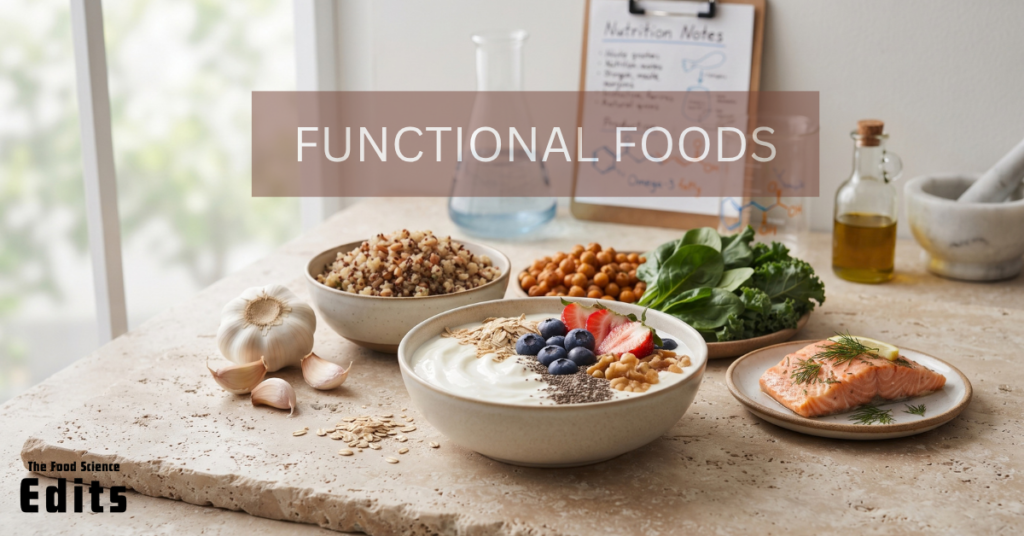
With growing interest in nutrition and preventive health, you may have heard the term Functional Foods more often. But what does it actually mean? Can foods such as yogurt, oats, berries, nuts, and fatty fish provide benefits beyond basic nutrition?
Functional Foods are foods that contain naturally occurring or added components that may provide health benefits beyond supplying essential nutrients. Examples include foods rich in fiber, probiotics, omega-3 fatty acids, vitamins, minerals, and plant compounds such as polyphenols.
However, functional foods are not magic foods or medicines. Their potential benefits depend on the food itself, the amount consumed, the overall diet, and individual health needs. Research generally supports eating a varied diet rich in minimally processed foods rather than relying on one special food or product.
So, do functional foods really improve your health? They can contribute to better health when they are part of a balanced dietary pattern. This guide explains the main functional foods benefits, common examples, their limitations, and practical ways students can include them in everyday meals.
What Are Functional Foods?
Functional foods are foods that may provide physiological or health-related benefits in addition to their basic nutritional value.
For example, oats provide carbohydrates and nutrients, but they are also rich in dietary fiber. Yogurt provides protein and calcium, while some varieties contain live microorganisms that may support the gut microbiome. Fatty fish provides protein and essential nutrients along with omega-3 fatty acids. The term is commonly used for foods containing components such as:
- Dietary fiber
- Probiotics and prebiotics
- Omega-3 fatty acids
- Vitamins and minerals
- Polyphenols
- Carotenoids
- Plant sterols
- Other naturally occurring bioactive compounds
It is important to understand that not every food marketed as “functional” has the same level of scientific evidence behind its health claims. Food labels may make different types of claims, and regulatory requirements vary by country. For example, the U.S. FDA distinguishes health claims from nutrient-content and structure/function claims. In simple terms, functional foods are best viewed as nutritious foods with potentially beneficial components, not as replacements for medical treatment.
What Are the Main Types of Functional Foods?
There are several types of functional foods, and they can be grouped according to their important components or how they may support health.
1. Naturally Functional Foods
These foods naturally contain bioactive compounds. Examples include:
- Fruits and vegetables
- Whole grains
- Nuts and seeds
- Fatty fish
- Legumes
- Green tea
For instance, whole grains contain fiber, vitamins, minerals, antioxidants, and phytochemicals.
2. Probiotic Foods
Probiotic foods contain beneficial live microorganisms when the specific microorganisms and amounts meet the scientific definition of a probiotic. Common examples include certain yogurts, kefir, kimchi, and other fermented foods containing appropriate live cultures. However, not every fermented food automatically qualifies as a probiotic food. Processing such as heating or pasteurization can also reduce or eliminate live microorganisms.
3. Prebiotic Foods
Prebiotics are substances, particularly certain types of nondigestible carbohydrates, that can be utilized by beneficial microorganisms in the gut. Foods containing prebiotic fibers include:
- Garlic
- Onions
- Bananas
- Asparagus
- Beans
- Whole grains
These foods can help provide substrates for gut microorganisms.
4. Fortified or Enriched Foods
Some foods are modified by adding nutrients that may be lacking or insufficient in the normal diet. Examples include foods fortified with vitamins, minerals, or other nutrients. However, fortified does not automatically mean healthier. Students should still check the complete nutrition label rather than focusing on one added nutrient.
Functional Foods Examples and Their Key Benefits
Looking at functional foods examples makes the concept easier to understand.
| Functional food | Important component | Potential role |
| Oats | Soluble fiber | Supports healthy cholesterol levels and digestive health |
| Yogurt with live cultures | Probiotic microorganisms, protein, calcium | Supports gut health and provides essential nutrients |
| Berries | Polyphenols and other plant compounds | Contribute antioxidants and other bioactive compounds |
| Fatty fish | Omega-3 fatty acids, protein | Supports normal cardiovascular and overall health |
| Nuts | Unsaturated fats, fiber, minerals | Supports heart-healthy dietary patterns |
| Beans and lentils | Fiber, plant protein | Supports digestive health and nutrient intake |
| Whole grains | Fiber, vitamins, minerals, phytochemicals | Supports digestive and metabolic health |
| Garlic and onions | Prebiotic compounds and phytochemicals | Contribute to a fiber-rich, plant-based diet |
The potential benefits do not come from a single compound in isolation. Whole foods contain combinations of nutrients and bioactive compounds that may work together. For example, whole grains contain bran, germ, and endosperm. The bran supplies fiber and several micronutrients, while the germ contains healthy fats, vitamin E, vitamins, minerals, and phytochemicals.
What Are the Health Benefits of Functional Foods?
The health benefits of functional foods depend on the specific food and its components. They should therefore be discussed as potential contributions to health rather than guaranteed effects.
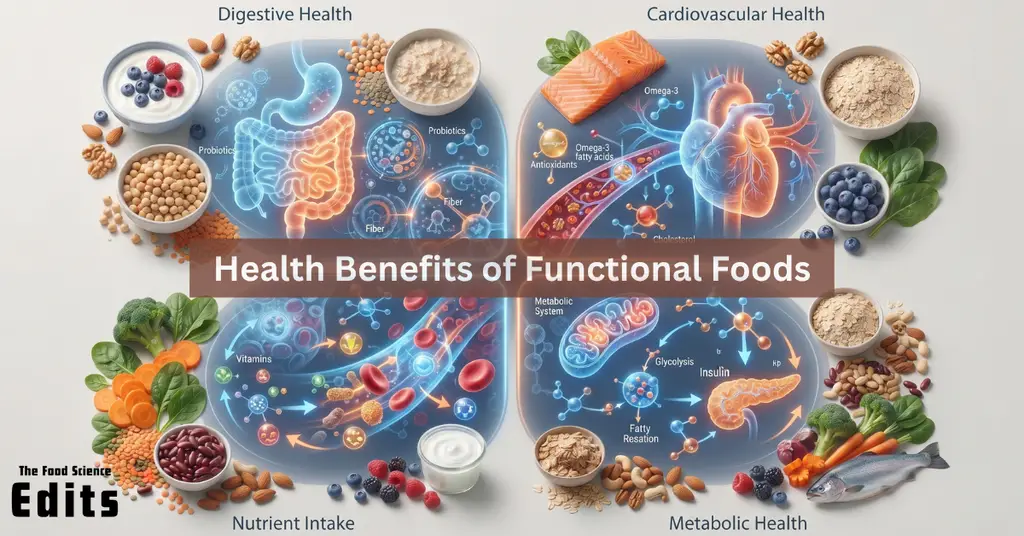
1. Digestive and Gut Health
Fiber-rich foods support normal digestion and provide material that gut microorganisms can use. Prebiotic-rich foods may also influence the composition and activity of the gut microbiome. Fermented foods containing appropriate live microorganisms may provide probiotics, although their effects can vary according to the microorganism and individual.
2. Heart Health
Foods such as whole grains, nuts, legumes, and fatty fish can fit into dietary patterns associated with cardiovascular health. Whole grains are particularly useful because their fiber and other components may contribute to healthier cholesterol, blood glucose, and cardiovascular risk profiles.
3. Better Nutrient Intake
Functional foods can make a diet more nutrient-dense. Fruits, vegetables, whole grains, nuts, seeds, legumes, and fish provide different combinations of vitamins, minerals, protein, fiber, and bioactive compounds. This variety matters because no single food supplies everything the body needs.
4. Metabolic Health
Replacing highly refined foods with fiber-rich whole foods can support healthier carbohydrate intake patterns. Fiber can slow digestion and absorption and may help moderate post-meal blood glucose responses.
5. Overall Healthy Dietary Patterns
Perhaps the biggest benefit is that functional foods can encourage better food choices. A diet containing vegetables, fruits, legumes, whole grains, nuts, seeds, and other minimally processed foods provides a broad range of nutrients and bioactive compounds. Research on healthy dietary patterns generally emphasizes overall diet quality and variety rather than relying on individual “superfoods.”
Do Functional Foods Really Improve Your Health?
Yes, functional foods can contribute to better health, but they should not be viewed as miracle foods.
The strongest way to think about functional foods is in the context of an overall dietary pattern. Eating oats once does not automatically improve cholesterol, and eating yogurt once does not transform the gut microbiome. Consistent dietary habits matter more than individual foods.
For example, regularly choosing whole grains instead of refined grains can increase fiber and other beneficial food components. Similarly, including vegetables, fruits, legumes, nuts, seeds, and fish can improve the nutritional quality of meals.
The evidence also differs between foods. Some functional components have substantial research behind them, while claims surrounding certain commercial products may be less established. This is especially important for students because social media can make individual foods appear more powerful than the evidence supports.
A practical rule is:
Focus on dietary patterns first, functional claims second.
How to Add Functional Foods to Your Daily Diet
Adding functional foods does not require an expensive diet or complicated meal plan. Students can make small changes to familiar meals.
1. At Breakfast
Try:
- Oatmeal topped with banana and nuts
- Plain yogurt with berries and seeds
- Whole-grain toast with eggs and vegetables
2. At Lunch
Choose:
- Brown rice or another whole grain
- Beans or lentils
- A mixed vegetable salad
- Yogurt alongside a balanced meal
3. As Snacks
Instead of relying mainly on highly processed snacks, consider:
- Fresh fruit
- A small portion of nuts
- Yogurt
- Roasted chickpeas
- Whole-grain options
4. At Dinner
Build a balanced plate containing a source of protein, vegetables, and a fiber-rich carbohydrate such as whole grains or legumes. The goal is not to add every functional food available. Instead, gradually increase variety and replace some less nutritious choices with nutrient-dense alternatives.
Are There Any Risks or Limitations?
Functional foods are generally ordinary foods, but there are important limitations.
1. Not Every Health Claim Is Strongly Supported
A product being advertised as “functional” does not automatically mean its claimed benefit has been established through strong human research. Consumers should distinguish scientific evidence from marketing language.
2. Too Much Fiber Too Quickly Can Cause Discomfort
Increasing fiber suddenly may cause gas, bloating, or digestive discomfort. Introducing high-fiber foods gradually and maintaining adequate fluid intake can help some people adjust.
3. Fermented Does Not Always Mean Probiotic
Some fermented products may contain microorganisms, but processing can destroy live cultures. Therefore, the words “fermented” and “probiotic” should not automatically be treated as synonyms.
4. Functional Foods Are Not Medicines
They may support a healthy diet, but they should not replace prescribed treatment or professional medical advice for a health condition.
5. Individual Responses Can Differ
The effects of particular foods may vary according to genetics, existing health conditions, medications, allergies, food intolerances, and overall dietary habits.
How to Choose Functional Foods Wisely
Choosing functional foods wisely means looking beyond attractive packaging and health claims.
Use these simple guidelines:
- Choose whole or minimally processed foods regularly.
- Look at the nutrition facts panel and ingredient list.
- Prioritize fiber-rich foods such as whole grains, vegetables, fruits, and legumes.
- Choose unsaturated-fat sources such as nuts, seeds, and fish.
- For probiotic foods, check whether live cultures are actually present.
- Do not assume “natural,” “fortified,” or “functional” automatically means healthy.
- Limit products that are high in added sugars, sodium, or saturated fat.
- Choose variety rather than depending on one food.
For example, a cereal labeled “whole grain” may still contain substantial amounts of added sugar. Reading the ingredient list and nutrition information gives a more complete picture of the product.
Frequently Asked Questions
What are functional foods?
Functional foods are foods that provide basic nutrition while also containing components that may offer additional physiological or health-related benefits.
What are the best examples of functional foods?
Common examples include oats, whole grains, fruits, vegetables, legumes, nuts, seeds, fatty fish, and certain fermented foods containing live microorganisms.
Are functional foods better than regular foods?
Not necessarily. The term “functional” highlights particular components or potential benefits, but overall dietary quality is more important than choosing foods simply because they are marketed as functional.
Can functional foods improve gut health?
Some functional foods can support gut health. Fiber-rich foods provide substrates for gut microorganisms, while certain fermented foods can provide live microorganisms. However, effects vary between foods and individuals.
Do functional foods prevent diseases?
Some dietary components are associated with lower disease risk, but individual foods should not be presented as disease-prevention or treatment products without appropriate evidence. Health claims on food labels are subject to specific regulatory requirements in jurisdictions such as the United States.
Are functional foods suitable for students?
Yes. Students can include functional foods as part of an affordable and balanced diet by choosing options such as oats, beans, lentils, seasonal fruits and vegetables, whole grains, yogurt, nuts, and seeds.
Conclusion
Functional Foods can be a useful part of a healthy diet because many contain fiber, probiotics, omega-3 fatty acids, vitamins, minerals, polyphenols, and other bioactive compounds. Research supports the value of many of these foods, particularly when they are included consistently within an overall healthy dietary pattern.
The key is not to search for one “superfood.” Instead, build meals around a variety of minimally processed foods, including fruits, vegetables, whole grains, legumes, nuts, seeds, and appropriate protein sources.
For students, the simplest approach is also one of the most practical: eat a varied diet, choose nutrient-dense foods regularly, read food labels, and treat health claims with a critical eye. Functional foods can support good nutrition, but they work best as part of the bigger picture of a balanced lifestyle.
Explore More
It is a vast and fascinating field, with so much more to discover. Explore more articles on The Food Science Edits to learn about food safety, processing, preservation, packaging, product development, and the science behind the food we eat.
Have a question or something to add? Share your thoughts and insights in the comments. We’d love to hear your perspective.
Want to explore more? Discover our latest articles and stay updated with The Food Science Edits.
Join the conversation on Instagram, LinkedIn, or Facebook for more food science insights. Those social links are already available in your site’s footer.

Atika Ishtiaq is a Food Science & Technology graduate, researcher, and content writer, and the founder of The Food Science Edits. She combines her background in food science with research-based writing to create clear, engaging, and informative content on food science, food technology, nutrition, food safety, and related topics.